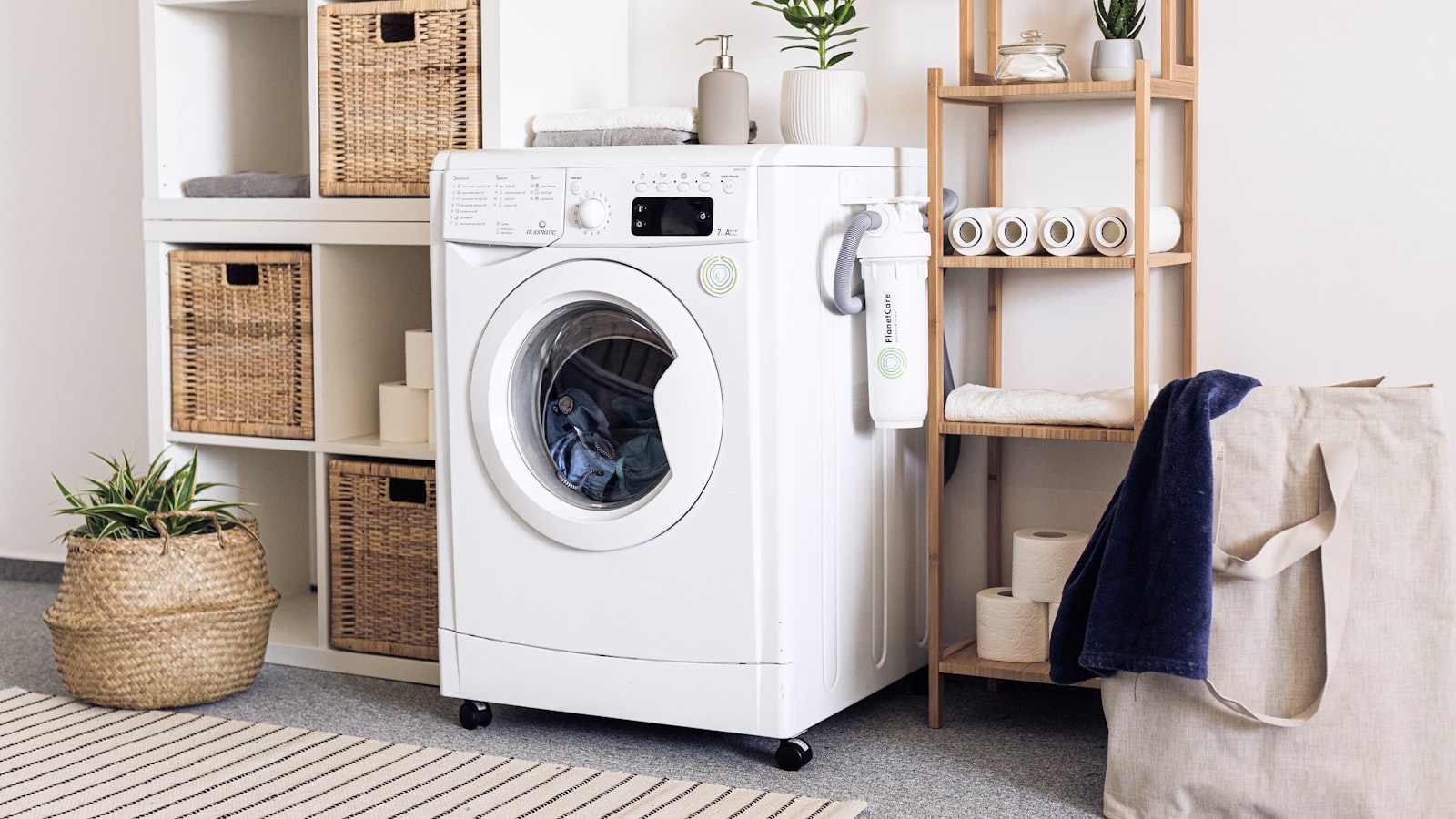
The laundry room is a workspace, plain and simple, and like any workspace it runs on whether it's set up for the job. When it is, laundry moves through in a steady flow. When it isn't, clean and dirty clothes mix, detergent bottles crowd the machines, and the whole thing becomes a chore you put off until there's nothing left to wear.
Whether you've got a dedicated room, a closet, or a corner of the basement, the same principles apply. Give sorting, supplies, and folding each a home, use the space above the machines, and build a flow that keeps clothes moving. Do that and laundry stops being a dreaded pileup and becomes a routine that mostly runs itself. Here's how.
Set up a sorting system#
Half of laundry is sorting, and a room without a sorting system is a room where clothes pile on the floor and colors bleed into whites. The fix is to give dirty laundry somewhere to land and separate before wash day, so sorting isn't a job you do all at once on a crowded floor.
A few baskets or a divided hamper do the work. The exact split is up to how you wash, but a simple setup covers most households:
- Lights and darks in separate baskets so the sorting is already done by wash day.
- A spot for delicates or anything that needs special handling, kept apart so it doesn't get thrown in on the wrong cycle.
- A small bin for singles — the lone socks and orphaned items waiting for their match to turn up.
- A basket for clean, unfolded laundry so it doesn't get mixed back in with dirty piles.
The single-sock bin sounds minor but saves real frustration — instead of a drift of lonely socks or tossing them too soon, they wait in one spot until their partner appears. When sorting happens gradually as clothes come off, wash day is just loading the machine, not untangling a mountain first.
Use the walls and vertical space#
Laundry rooms are usually small, and the floor and any counter fill up fast with baskets and bottles. The walls, though, are almost always empty — and that's where the storage you need is hiding.
Shelves above the machines turn dead wall space into a home for detergent, supplies, and folded laundry waiting to be put away. A cabinet up there hides the clutter of bottles and boxes if you'd rather not see them. Even a single well-placed shelf changes how much the counter and floor have to hold.
A rod or a few hooks are worth adding, too. A hanging rod lets you air-dry delicates and hang shirts straight off the line to skip ironing, while hooks hold the laundry bag, the lint brush, and the odds and ends that otherwise clutter a surface. If floor space is tight, a slim rolling cart that tucks between or beside the machines adds storage without needing a permanent footprint.
If your machines are front-loaders, the countertop you can create by fitting a board across the top of both is some of the most useful workspace in the room. It gives you a spot to sort, treat stains, and fold on, right where the clothes come out — no carrying baskets to another room. Just keep that surface clear the way you would any workspace, so it's ready when you need it rather than buried under supplies.
In a laundry room, every bottle on a shelf and every basket off the floor is a bit of workspace won back. Build upward and the room starts working with you.
Going vertical is the same move that rescues a cramped bathroom — when the walls do the storing, the limited floor stays clear and the room feels far more workable than its size suggests.
Keep supplies simple#
Laundry supplies breed clutter. Detergents, softeners, stain removers, dryer sheets, bleach, the special stuff for delicates — bottles and boxes stack up until the surfaces around the machines disappear. Most of it isn't even used often.
Pare it back to what you actually use. A good detergent, a stain remover, and maybe one or two extras cover the vast majority of laundry. The specialty products you reach for twice a year can live tucked away rather than crowding the everyday spot. Keeping the working set small makes the room instantly tidier and the routine faster.
Contain what you keep. A caddy or a small basket for the daily supplies keeps them together and easy to grab, and it can be lifted down in one go when you're wiping the shelf. Decanting powder detergent into a labeled container with a scoop is tidier than a torn box, and it makes measuring quicker. Little touches like these keep the supply corner from sliding back into chaos.
Keep an eye on backstock, too. One spare of the essentials is sensible; a stockpile of six detergents just eats the storage you need for everything else. Buy more when you're genuinely low, not by reflex.
Build a flow that keeps moving#
The real secret to a laundry room that works isn't storage at all — it's flow. Laundry becomes overwhelming when it stalls: clothes wash but never get folded, clean piles grow on every surface, and the backlog turns a simple task into a dreaded all-day job. Keeping laundry moving is what prevents that.
Think of laundry as a line that shouldn't stop: dirty to sorted, sorted to washed, washed to dried, dried to folded, folded to put away. The pileups happen at the transitions, usually the last two — clean clothes that never get folded and put away. So the habit that matters most is finishing each load through to put-away rather than leaving it half-done in a basket.
A little rhythm helps here. Rather than letting it all build for one exhausting laundry marathon, running a load or two on a regular schedule keeps the volume manageable and the room clear. Fold straight from the dryer while things are warm and wrinkle-free, and put away promptly so clean laundry doesn't camp out on a surface for days. Small and steady beats big and dreaded, the same way a quick daily reset keeps any busy room under control.
Set up your sorting, put the walls to work, keep the supplies lean, and above all keep the laundry flowing through to done. A laundry room organized this way stops being the room where clothes go to pile up and becomes a quiet, efficient workspace — one that turns an endless chore into a routine you barely have to think about.